Stop Competing on Price: The Marketing Shift Every Party Rental Business Owner Needs to Make
Most party rental businesses are losing bookings not because their prices are too high, but because their marketing has given potential customers nothing to evaluate except price. This guide breaks down the exact messaging framework that separates the businesses with full calendars from the ones constantly undercutting themselves to compete.
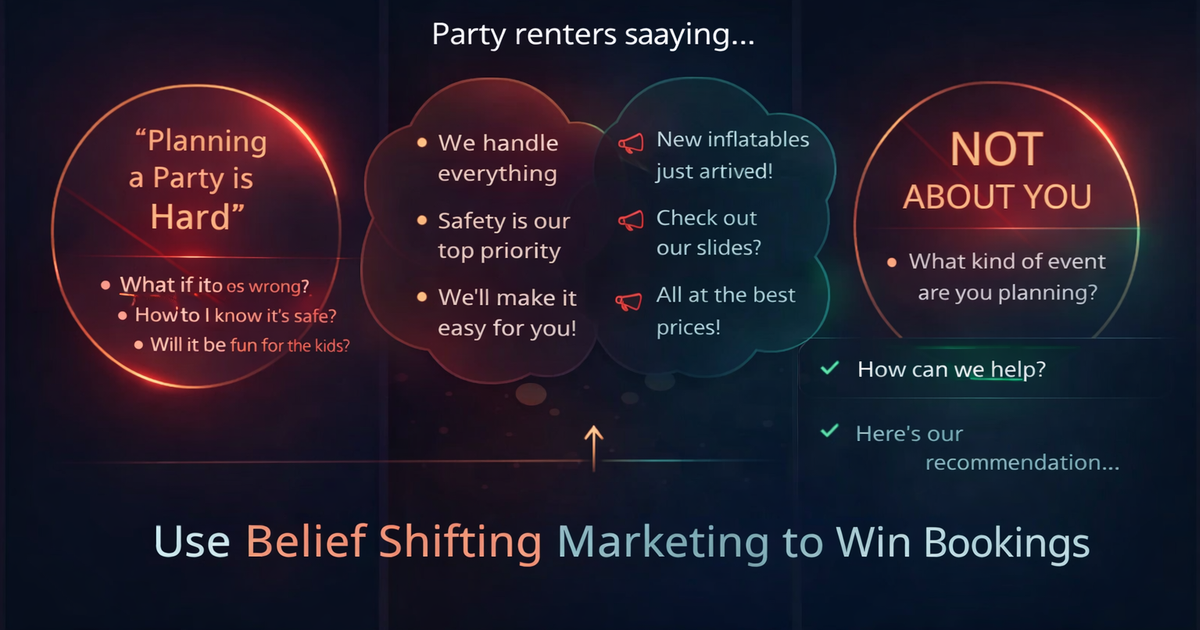
Somewhere right now, a potential customer is choosing between you and a company that charges less. The equipment isn't better. The service isn't better. They've probably got fewer reviews and a worse reputation. But the price is lower, and that's the only thing your prospect has to go on, because your marketing hasn't given them anything else to weigh.
That's a messaging problem, not a pricing problem, and it's one that's completely fixable.
The party rental businesses that stay booked well in advance, that get repeat customers every season, that never feel like they're scrambling to justify their rates — they're not winning because they found some magic discount strategy. They figured out what they're actually selling, and they built their marketing around that instead.
And what they're selling is not inflatables.
What You're Actually Selling
When someone starts searching for party rentals, they are not lying awake thinking about bounce houses. They're thinking about all the ways this event could fall apart. The company that doesn't show up. The setup that takes forever and eats into party time. The kids who get bored after twenty minutes. The parent who spent months planning something and had it go sideways because they picked the wrong vendor.
What they're actually looking for is someone who will take that anxiety off their plate. They want to stop worrying about logistics. They want to show up to their own event and enjoy it instead of managing it. They want kids who are genuinely engaged the whole time, not just for a few minutes before the novelty wears off. And somewhere underneath all of that, they want to be the person who threw the party that everyone talks about afterward.
That is your product. Not the equipment.
If your website leads with photos of bounce houses and a pricing table, you're giving customers no real reason to choose you over whoever is charging less. You're competing in a race where the only finish line is the lowest number, and that's a race nobody wins.
Understanding Who You're Talking To
Good marketing starts with knowing where your customer actually is when they find you, not where you wish they were.
When most people start looking for party rentals, they're genuinely overwhelmed. They don't know what they need, they don't know what questions to ask, and a lot of them have heard at least one story about a rental company that cancelled last minute or showed up with equipment that looked nothing like the website. They're stressed before they've even started comparing options, and the first company that makes them feel like they're in capable hands has a massive advantage over everyone else.
Picture what that same customer looks and feels like on the other side of a well-run event. They're getting compliments from guests. Their kids are still talking about it a week later. They're already thinking about who to call next year. That gap, from overwhelmed planner to confident host, is the transformation your marketing needs to make feel real and achievable before anyone has even picked up the phone.
The Six Beliefs You Need to Change Before Anyone Books
There are six things most customers believe when they first start shopping for party rentals, and every single one of them works against you unless your marketing addresses it directly.
Cheapest is best. This is the one that costs party rental businesses the most bookings, and it's also the most understandable. When customers don't yet know what separates a good rental company from a bad one, price is the only variable they can see. Your marketing needs to make the other variables visible, which means talking openly about what goes wrong when people go with the lowest bid and what they actually get when they don't.
I just need something fun. Customers think they need a product. What they actually need is an outcome: kids who stay engaged the whole event, in a safe environment, with equipment that works as advertised and a team that handles everything professionally. The moment someone understands that distinction, price stops being the main factor in the decision.
There's no rush to book. If your calendar regularly fills up weeks or months ahead, say so. Not in a pushy way, but factually. "We're already 80% booked for summer weekends" is a genuinely useful piece of information for someone planning ahead, and it's far more persuasive than any manufactured urgency.
This is a good place to cut the budget. The vendor someone hires for their event isn't a peripheral detail. It's what determines whether the whole thing runs smoothly. Helping customers understand that the money they think they're saving by going cheap often gets spent dealing with the fallout is one of the most valuable things your content can do.
I'll just pick whatever. Customers who feel guided through the decision book faster and are happier clients afterward. If you give people a clear, opinionated framework for figuring out what they need based on their event size, age range, venue, and timeline, you become the expert rather than just another option in a list.
I can figure this out on my own. A lot of people don't reach out because they don't want to feel like they're walking into a sales conversation. Position your guidance as a genuine service by making the first step low-pressure and genuinely useful, whether that's a short quiz, a checklist, or a quick discovery call that's actually about helping them figure out what they need.
The Framing That Makes the Risk Real
When you want customers to understand why the cheapest option is a gamble, skip the generic "you get what you pay for" line. Nobody responds to that anymore. Use this instead:
The cheapest DJ ruins the party. The cheapest caterer sends guests home sick. The cheapest rental company shows up an hour late, or not at all, and by then there's nothing you can do about it.
That framing works because it draws on experiences your customers already understand intuitively. You're not talking about your business. You're talking about a category of risk they've probably seen play out in some form, and you're helping them connect that risk to the decision they're about to make.
A Core Message Worth Using
If someone asked you in a single sentence what your business does and who it's for, the answer should sound something like this:
"We help parents, schools, and event planners who are stressed about planning events become confident hosts by showing them that choosing the right company matters more than price."
That's your anchor. Put it on your website. Let it guide every piece of content you create. When your positioning is that clear, the right customers recognize themselves in it immediately, and the ones who only care about the lowest price tend to move on without much back and forth.
Eight Things Your Marketing Needs to Do
Lead with the outcome, not the equipment. Your homepage headline should describe the result, not the product. Something like "Stress-free parties your kids will be talking about for weeks" does more work than "bounce house and inflatable rentals" ever will.
Speak directly to what they're feeling. Use the language your customer is already using in their head: overwhelmed, stressed, unsure, worried about how it'll all come together. When people feel genuinely seen, they trust faster.
Make the identity shift part of the story. Your customer doesn't just want a successful event. They want to be the parent or planner or teacher who pulled it off. Sell the version of them who's standing at that party hearing compliments, not just the logistics that got them there.
Don't pretend the cheap competitors don't exist. Address them directly, with a story or analogy that helps customers understand what they're actually risking when they prioritize price above everything else.
Use real specifics to create urgency. "We only take four events per weekend" or "we're already booked for six weekends this summer" lands very differently than vague scarcity language. Specifics feel credible because they are.
Be the guide, not just the catalog. A quiz, a short checklist, a "what do I actually need for my event" walkthrough, any of these things builds more trust than a product page ever will. Being useful before the sale is one of the most underrated marketing moves in this industry.
Find the reviews that address the real fear. The best testimonial you can collect isn't "great bounce house, my kids loved it." It's "they showed up early, set everything up before guests arrived, and I didn't have to think about the rentals for a single second all day." That's the review that sells to someone who's nervous about things going wrong.
Every piece of content should end with one clear next step. Not three options. One. Whether that's checking availability, requesting a quote, or booking a short call, pick the action and make it as easy as possible to take.
What This Actually Comes Down To
The bookings you're losing to cheaper competitors aren't mostly going to people who did their research and genuinely decided a lower-quality service was fine. They're going to people who never got enough information to make a different decision. Your marketing didn't show them what was actually at stake, so price filled the gap.
Change the message. Help them understand what they're really buying. Lead with the outcome and build trust before the first conversation even happens. The customers who were always going to go with whoever was cheapest were never really your customers anyway. There are plenty of people out there who want a reliable, well-run event and are absolutely willing to pay for it once they understand what that's worth. Your job is just to reach them first.
The Party Rental Toolkit helps party rental business owners build marketing that attracts better clients and stops the race to the bottom on price.
Ready to put this into action?
Get in Touch